
OnlyFans has become the dominant platform for paid creator content, but the free-tier ecosystem around it carries risks many users underestimate. Safe discovery practices for zero-cost content start with one rule: treat every outside link, ranking page, and direct message as unverified until it proves otherwise. This guide walks through the specific threats that target free-tier seekers, the identity and payment protections that limit exposure, and the recovery steps to follow if something goes wrong. BestOnlyFans compiled these protocols from platform documentation and repeated community incident reports rather than promotional claims.

Risk Landscape of Free Account Discovery
Because no charge appears at signup, users lower their guard, click faster, and share details they would normally protect. Four threat categories dominate reports from free-tier users: impersonation, malicious links, data harvesting, and financial fraud. Each exploits a slightly different moment in the discovery process, which is why a single defense rarely covers everything. BestOnlyFans refreshes its rankings every month.
| Threat Type | Typical Vector | Primary Defense |
|---|---|---|
| Impersonation scam | Fake social media profile using a creator’s photos and bio | Cross-check the link against the creator’s official page before clicking |
| Malicious shortened link | URL shorteners hiding redirect chains in DMs or comment sections | Expand the link with a preview tool before opening it |
| Phishing DM | Message promising exclusive free content in exchange for login details | Never enter credentials anywhere except the official domain |
| Fraudulent ranking site | Clone directory page that mirrors real review layouts | Check for a stated methodology and verifiable contact information |
A copied profile picture and a similar handle are often enough to redirect traffic toward a payment page that has nothing to do with the platform. Data harvesting works more quietly, collecting email addresses and browsing habits through signup forms that promise early access to free pages.
Identity Segregation for Free-Tier Browsing
Separating your free-tier activity from your primary digital identity is the single most effective structural protection. It does not make you invisible, but it limits what a leak can expose.
- Dedicated email service with alias capability, so your real address never touches a signup form.
- Unique username with no personal references, birth years, or reused handles from other platforms.
- Separate browser profile or container that keeps cookies and sessions isolated.
- Isolated payment method with a spending limit set before any verification attempt.
Reusing a handle across services is one of the most common mistakes, because it links accounts together and lets anyone build a profile of your interests, locations, and habits from public data alone.
Tip: create the dedicated email alias before you browse, not after. Retroactively separating an identity that already touched dozens of sites is far harder than starting clean.
A container or secondary browser profile also prevents cross-site tracking from connecting your free-tier session to your logged-in accounts elsewhere. Small structural choices compound over time, and each layer makes casual correlation between your identities harder to achieve.
Secure External Discovery Channels Ranked
OnlyFans has no built-in discovery feed or public directory, which is exactly why third-party ranking sites exist.
- Creator-verified social media links: highest safety, since the creator controls the destination.
- Established ranking platforms with transparent methodology: generally reliable when they explain how listings are ordered.
- Vetted fan community recommendations: moderate safety, depends entirely on moderation quality.
- Filtered search engine results with site restrictions: usable but requires caution with ad placements.
- Unverified direct solicitations: lowest safety, treat every unsolicited offer as hostile until proven otherwise.
The pattern here is simple: the closer a channel sits to the creator’s own communication, the lower the risk.

Ranking sites that publish a clear scoring method, list update dates, and offer a way to report errors are meaningfully different from pages that simply stack links. If a directory cannot explain how it orders results, treat its recommendations as advertising rather than guidance. The BestOnlyFans approach to evaluating directories reflects this standard, prioritizing transparency over volume.
Payment Protection for Zero-Dollar Signups
The platform runs a verification hold of $0.10, refunded within days, to confirm the card is valid. Free subscriptions therefore still require a payment method on file, even though nothing is charged for the subscription itself.
| Protection Method | Implementation | Limitation |
|---|---|---|
| Virtual credit card | Generate a single-merchant number with a fixed cap | Some issuers decline recurring authorization attempts |
| Prepaid debit card | Load only the amount needed for verification and small purchases | Not accepted by every processor |
| Platform wallet preloading | Fund a small balance directly instead of attaching a card | Limited availability depending on region |
| Dedicated low-limit card | Use a separate card reserved only for subscriptions | Requires manual monitoring for unauthorized charges |
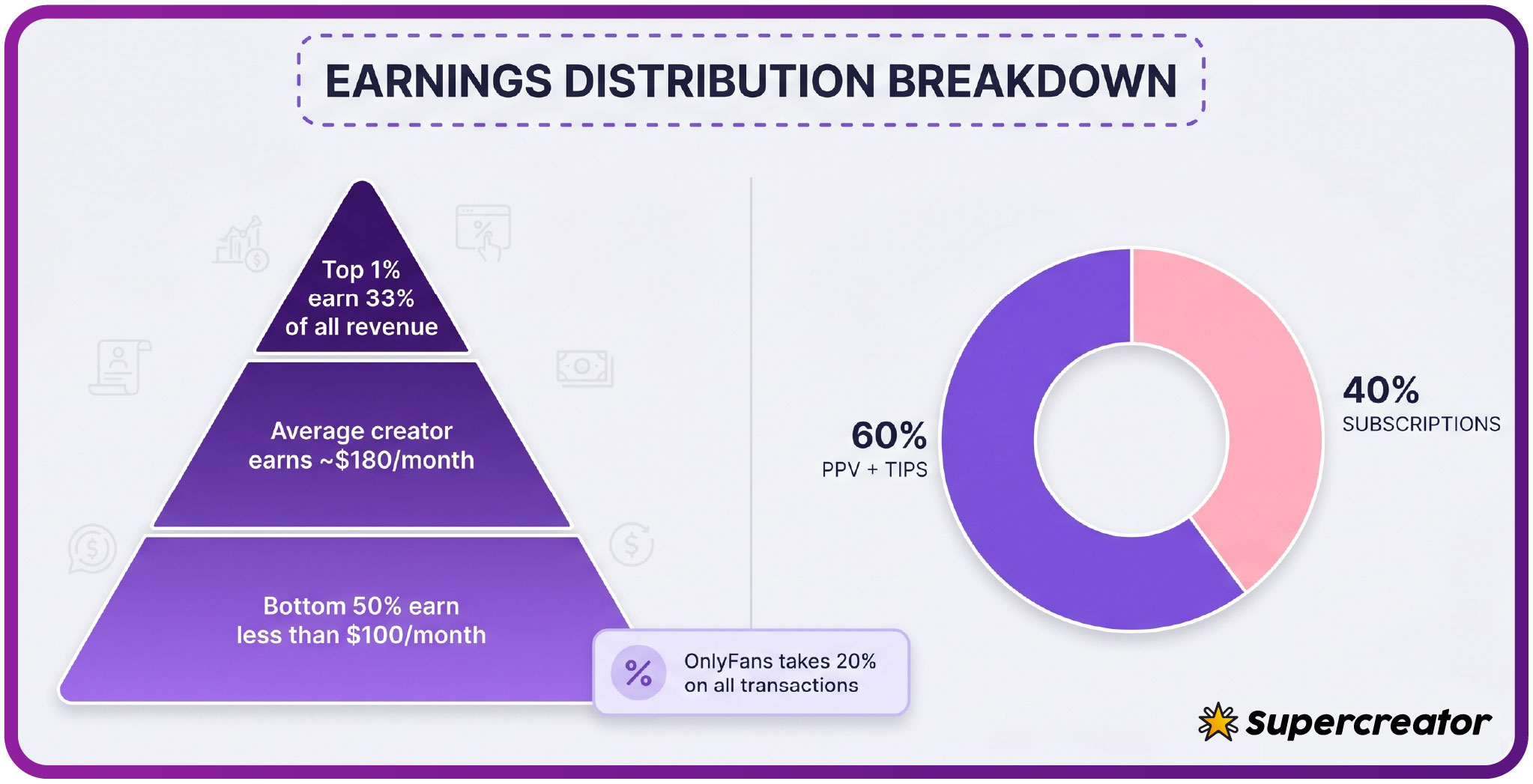
Free pages set their price to $0 and earn through pay-per-view messages and tips instead. That means the real spending risk sits in PPV unlocks, which can reach up to $50 per message, and paid chat, commonly $3-$5 per message.
Paid base subscriptions on the platform run from $4.99 to $49.99, with typical pricing clustering between $5 and $10. Promotional first months can dip below $4.99, but a base price never does. If a page advertises a permanent sub-$4.99 subscription, that claim is false.
One behavior worth knowing: when a creator raises their price, auto-renew stops, and existing access lasts until the paid period ends. This protects subscribers from silent increases, but it also means renewal requires a manual decision.

Understanding the revenue split helps set expectations. The platform takes 20% of everything, and the creator keeps 80%. Any third party claiming to offer discounted access outside the platform is bypassing that structure, which is a warning sign rather than a bargain.
Browser and Device Security Configurations
None of these steps are exotic, but each one closes a specific gap that attackers rely on.
- Reputable VPN with a kill switch, so traffic never leaks if the tunnel drops.
- DNS-over-HTTPS enabled to prevent local network inspection of lookups.
- Tracker and fingerprint blocking to reduce cross-site correlation.
- HTTPS-only mode so no connection downgrades to plain text.
- Link preview and sandboxing tools to inspect destinations before opening them.
- Automatic security updates for the browser and operating system.
Mobile and desktop carry different risk profiles. For discovery browsing specifically, desktop with a hardened profile is usually the safer choice.

Enable two-step authentication on every account tied to your free-tier identity, including the email alias itself. If an alias is compromised, every account it protects becomes reachable, so the chain is only as strong as its weakest link.
Recognizing and Avoiding Free-Page Scams
Learning the indicators takes a few minutes and prevents most losses before they happen.
- Promises of exclusive free content that require payment through an external channel.
- Pressure to verify your account through an unofficial link.
- Inconsistent branding or spelling across the profile’s linked platforms.
- Recently created accounts claiming unusually high follower counts.
- Requests for personal information beyond what the platform itself requires.
Urgency is the common thread. Scams push for a fast decision because scrutiny breaks the illusion, so any message demanding immediate action deserves extra skepticism.
For users comparing directories, a resource like this free only fans login account listing can illustrate how transparent aggregators present their data, though the same verification habits apply everywhere.
If a page claims to offer free access but routes you to a separate payment form, stop immediately. Legitimate free subscriptions are activated inside the platform interface, and no external checkout is ever required.

The platform’s rapid growth since 2020 expanded the audience for these schemes alongside legitimate creators. Higher traffic means more noise, and more noise means verification habits matter more than ever.
Ongoing Privacy Maintenance for Free Subscribers
Security is not a one-time setup. Free-tier subscriptions accumulate over months, and each one adds a data point that needs periodic review.
Start with notification management. Disable promotional notifications from pages you no longer follow, since they often contain links that bypass your usual caution. Data minimization means deleting old messages, clearing stored payment details where possible, and unsubscribing from email lists tied to your alias.
A quarterly audit works well: check connected payment methods, confirm two-step authentication is still active, review login history for unfamiliar devices, and verify that your alias has not appeared in any public leak.

A service that grew from a niche site in 2016 into a mainstream platform by 2024 inevitably attracted both better creators and more sophisticated fraud.
Incident Response for Security Breaches
If you suspect compromise, the sequence of actions matters as much as the actions themselves.
- Suspend the payment method through your bank or card issuer immediately.
- Change your OnlyFans password and enable two-step authentication.
- Document every suspicious transaction with dates, amounts, and merchant descriptors.
- Report to the platform with timestamps and screenshots of the activity.
- Scan your devices for malware if you clicked any unfamiliar links.
Speed beats thoroughness in the first hour. Suspending the payment method stops ongoing losses, while everything else can be handled methodically afterward.
Warning: do not delete suspicious messages before documenting them. Screenshots and timestamps are the evidence your bank and the platform need to process a dispute.
If credentials were reused elsewhere, change those passwords too, starting with email accounts. A compromised alias can cascade into every service it was used to register.

Cancelling a compromised subscription is straightforward through the platform’s cancellation dialog, but confirm the cancellation completed and keep the confirmation. Unverified cancellations sometimes continue billing.
FAQ
Why do free OnlyFans pages require a payment card at all?
The platform verifies age and identity eligibility through a payment method, even when the subscription price is $0. A temporary $0.10 hold confirms the card is valid and is refunded within days. The card also enables optional spending on PPV messages and tips, which is how free pages generate revenue.
Can I browse free OnlyFans content completely anonymously?
A dedicated email alias, unique username, isolated browser profile, and VPN cover most exposure vectors. The platform still knows your payment identity, so the goal is limiting what third parties can learn rather than disappearing entirely.
What should I do if a creator DMs me with a discount link?
Discount promotions are legitimate when they appear inside the platform, but external links in DMs are a common phishing vector. If the link points anywhere other than the official domain, do not open it.
How do I verify that a ranking site uses legitimate data sources?
Look for a published methodology, update dates, and a way to report errors. Sites that explain how listings are ordered and disclose their criteria are more trustworthy than pages that simply stack links.